
Ryanair (NASDAQ: RYAAY) Reports Q2 Earnings Miss Amidst Fuel Costs and Revenue Shortfall
Ryanair (NASDAQ: RYAAY) missed Q2 analyst forecasts for both earnings per share and revenue, indicating a challenging quarter for the low-cost airline. The company experienced a significant profit decline of 34% , primarily driven by a doubling in unhedged fuel prices and a 6% de
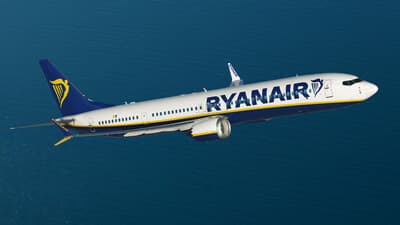
- Ryanair (NASDAQ: RYAAY) missed Q2 analyst forecasts for both earnings per share and revenue, indicating a challenging quarter for the low-cost airline.
- The company experienced a significant profit decline of 34%, primarily driven by a doubling in unhedged fuel prices and a 6% decrease in average ticket prices due to consumer hesitancy.
- Despite these operational headwinds, Ryanair maintains a robust financial foundation, evidenced by a very low debt-to-equity ratio of 0.02 and a trailing twelve-month price-to-earnings (P/E) ratio of 7.60.
Ryanair (NASDAQ: RYAAY) is a major low-cost airline based in Europe, a key player in the competitive European aviation market. The company's business model focuses on offering budget-friendly fares to a high volume of passengers. It operates a large fleet and competes with other European carriers by diligently keeping its operational costs as low as possible, a strategy crucial for success in the low-cost airline sector.
On July 20, 2026, Ryanair announced its quarterly financial results, providing an update on its financial performance. The company reported an earnings per share of $1.18, which unfortunately fell below the analyst forecast of $1.37. Additionally, its revenue of $5.01 billion did not meet the expected $5.06 billion, indicating a challenging quarter for the airline's top-line growth.
The lower earnings are a direct result of a significant profit decline. Ryanair's profit after tax fell by 34% to €538 million. A primary cause was the doubling in price for its unhedged fuel. This refers to the 20% of its fuel supply that Ryanair buys at current market prices, exposing the airline to volatile price increases in the global energy market.
The revenue shortfall is directly linked to a 6% decrease in average ticket prices. As highlighted by CNBC, CEO Michael O’Leary attributes this to "consumer hesitancy" caused by the Middle East conflict and broader economic uncertainty. This situation required the airline to strategically lower fares to encourage customers to book flights, impacting overall revenue.
Despite these operational challenges and market pressures, Ryanair maintains a very low debt-to-equity ratio of 0.02. This key financial metric demonstrates that the company finances its operations mainly through its own funds rather than relying heavily on borrowing, showcasing strong financial health. The company's trailing twelve-month price-to-earnings (P/E) ratio, a widely used measure for stock valuation, stands at 7.60, offering insights into its investment outlook.
Originally published by fmp.
View original article